Afterimage
SPRING/BREAK Art Show
Matthew Cronin, Catalina Tuca, Joseph Wilcox
September 23-28, 2026
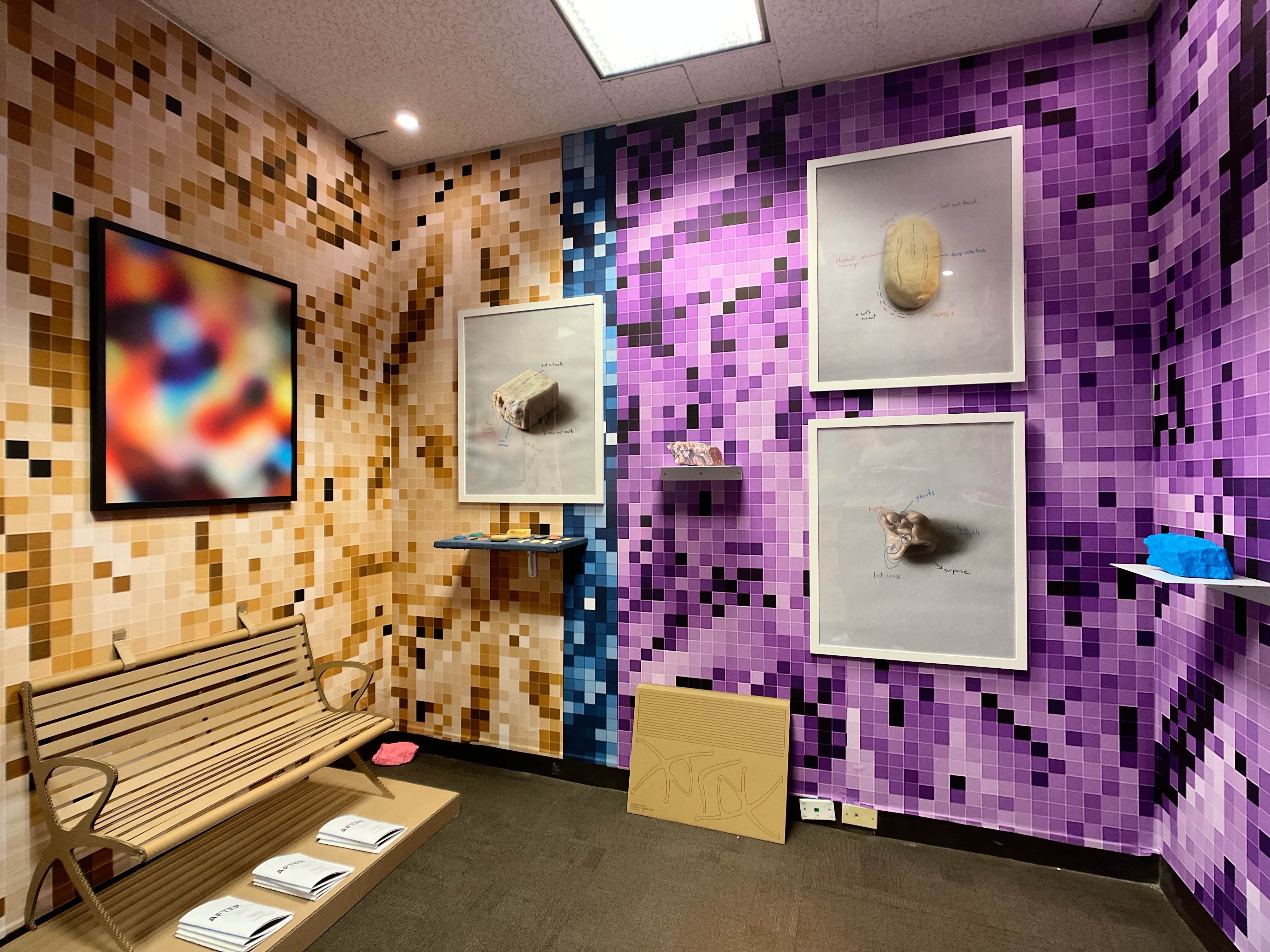
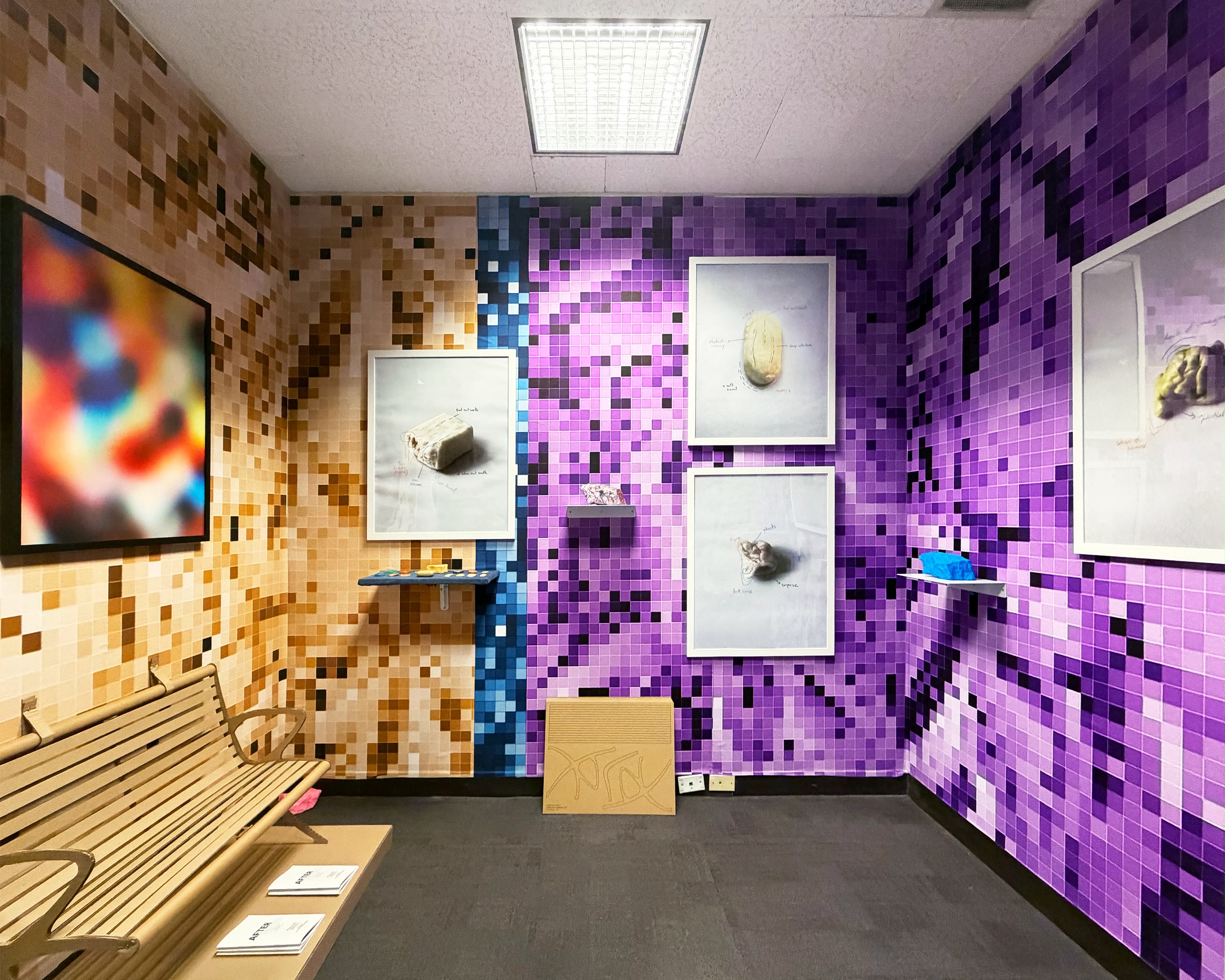
Afterimage investigates how glitches, bodily impressions, algorithmic fragments, and computational residues become surfaces where interpretation takes place. An afterimage suggests a lingering visual trace or a persistent form. In the exhibition, visual and material operations continue to be recorded and interpreted after their original source has disappeared. Combining works by Matthew Cronin, Catalina Tuca, and Joseph Wilcox, Afterimage explores the convergence between practices of divination and contemporary modes of data analysis.
Across history and cultures, humans have devised systems to interpret hidden patterns in the world: reading bones, studying celestial alignments, interpreting dreams, and analyzing statistical data. These methods promise access to meaning that lies beneath appearances. Yet they also share a structural paradox: their method of interpretation often remains opaque. In the present technological moment, algorithmic infrastructures have taken on a similar role. Artificial intelligence, digital imaging, and computational networks constantly generate interpretations; sorting, predicting, classifying, and synthesizing information. Meanwhile, their internal processes are largely inaccessible to the people who rely on them. What becomes visible is the result of layers of hidden operations, whose effects persist in the images, data, and interfaces we encounter every day.
Media theorist Vilém Flusser described images as the product of technologies that translate the world into coded representations according to programs we rarely see. Philosopher Yuk Hui similarly argues that technologies emerge from distinct cultural understandings of the world, a relationship he calls cosmotechnics. Together, these perspectives suggest that technologies are interpretive systems that translate reality into signs that can be read. If contemporary computational systems convert the world into data, older practices such as divination or astrology can be understood as earlier methods for reading patterns within the complexity of existence. In this sense, the algorithm and the oracle share a similar structure: both transform fragments of the world into meaningful patterns through hidden processes, leaving traces that continue to circulate and acquire meaning over time.
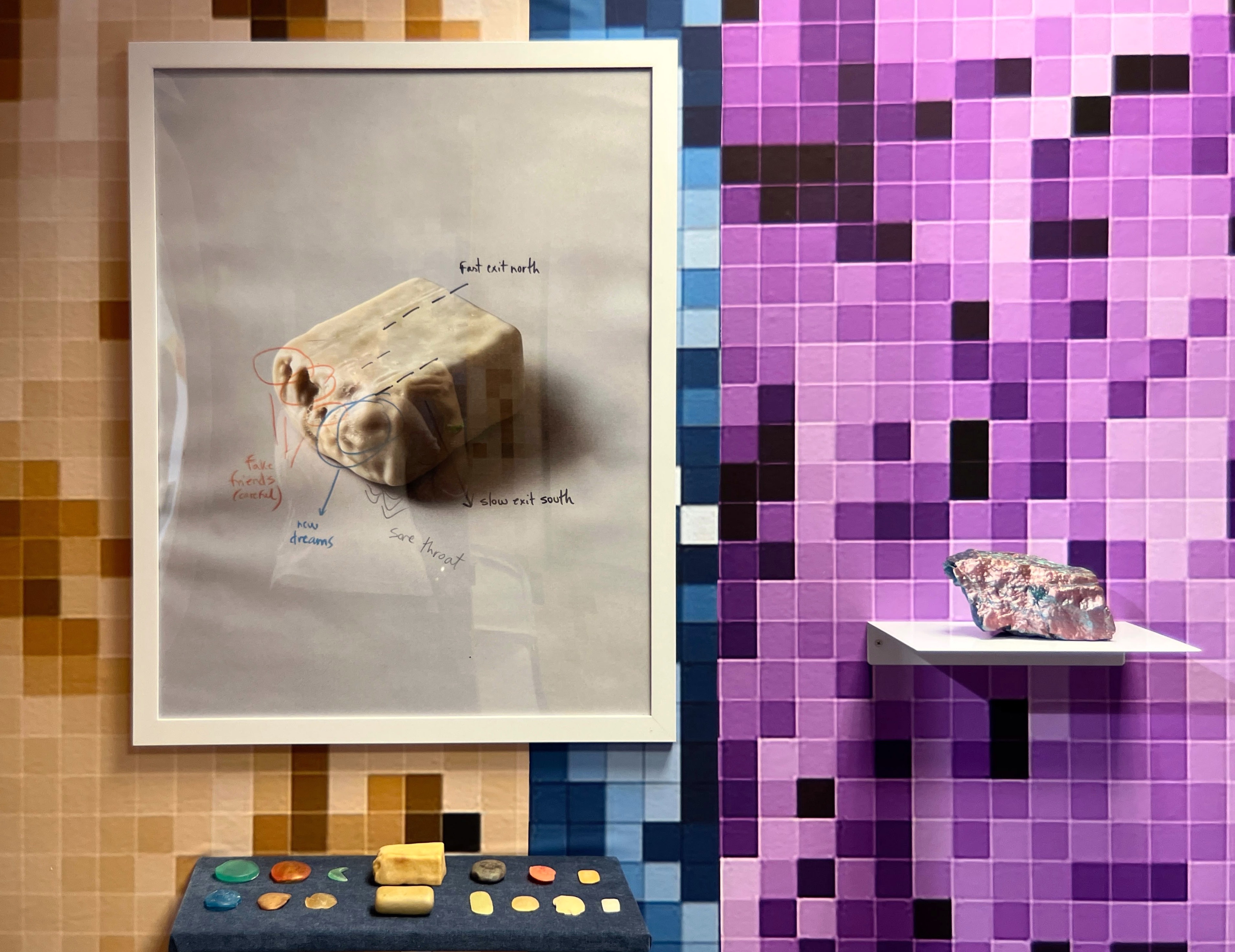
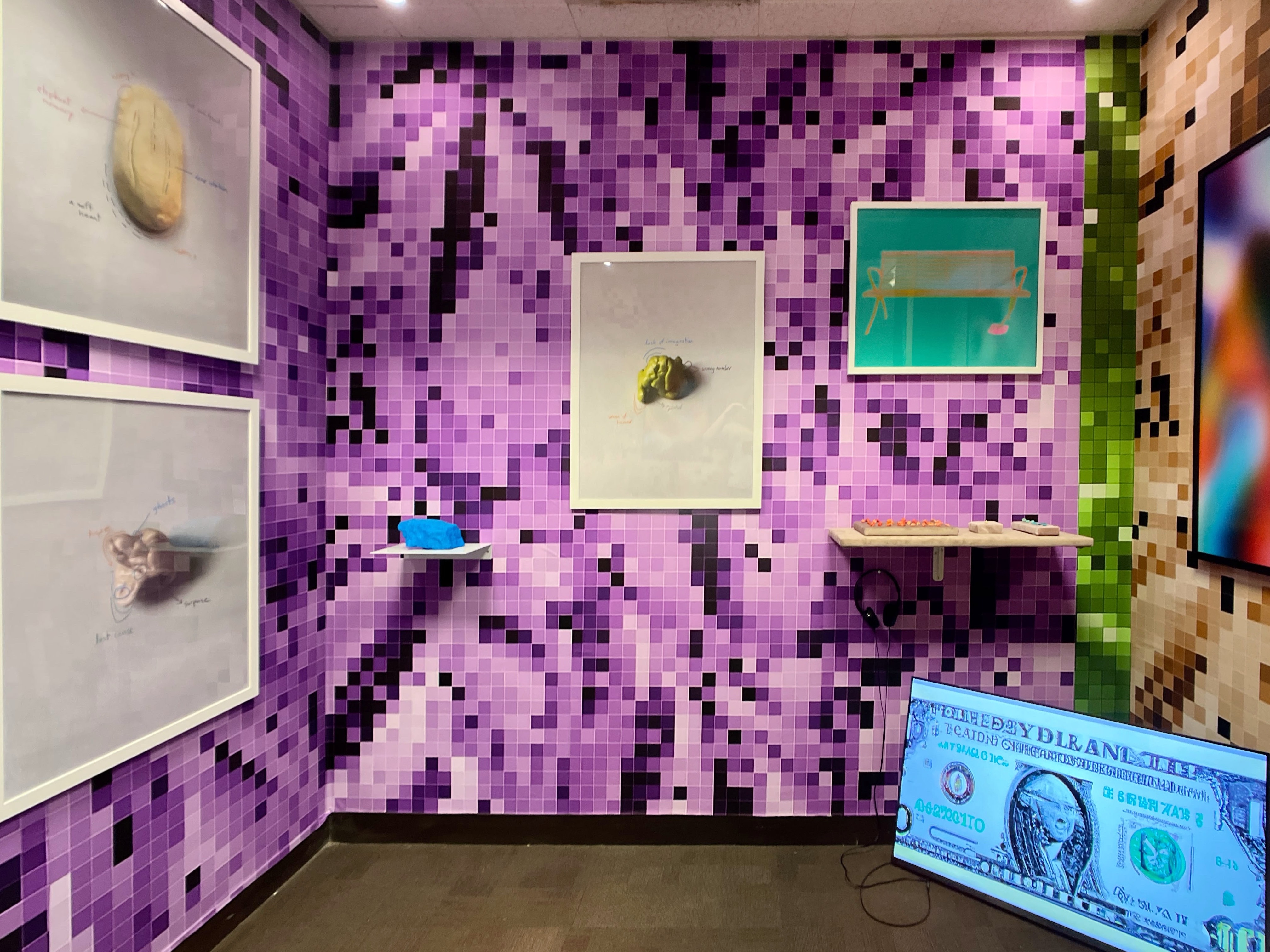
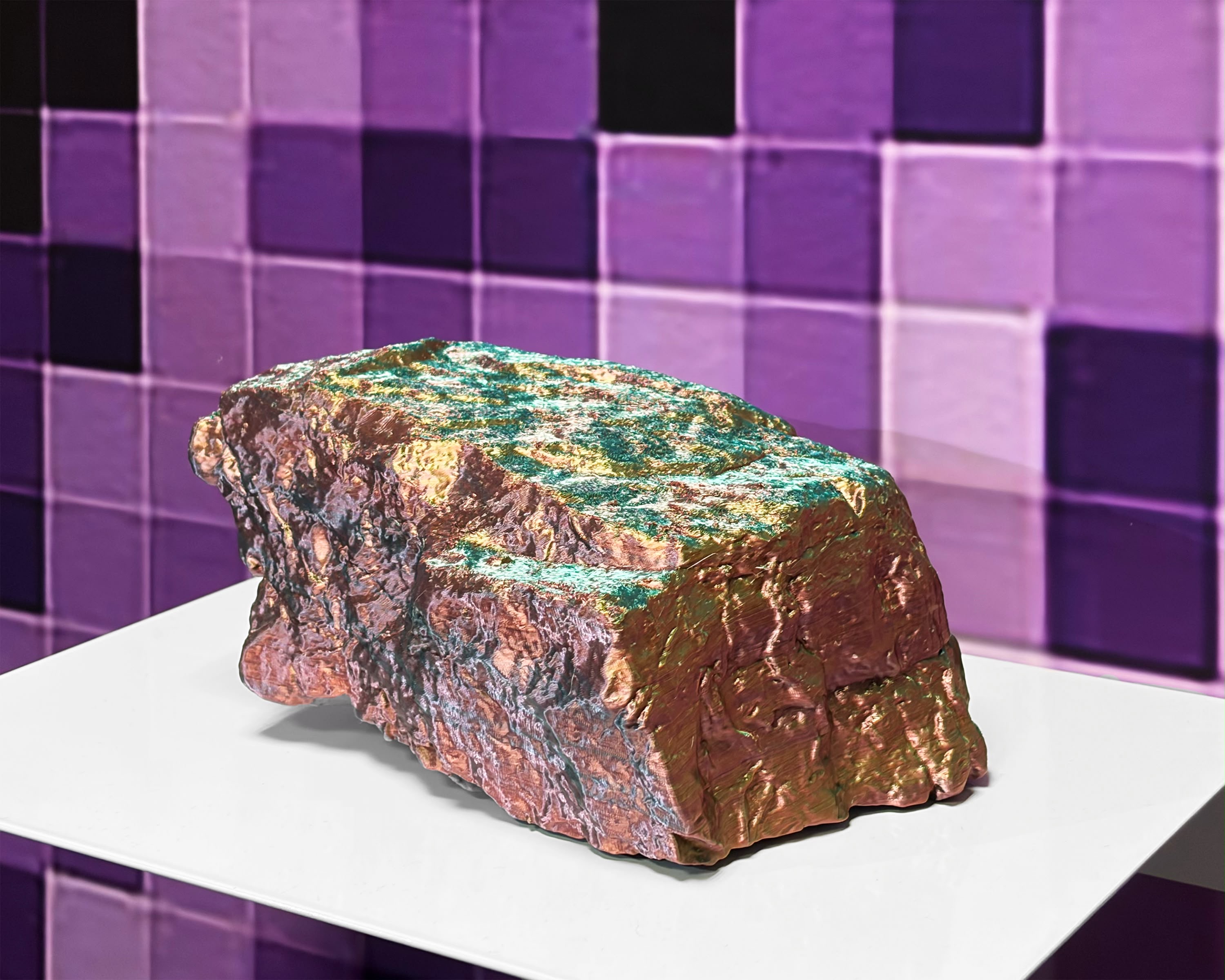
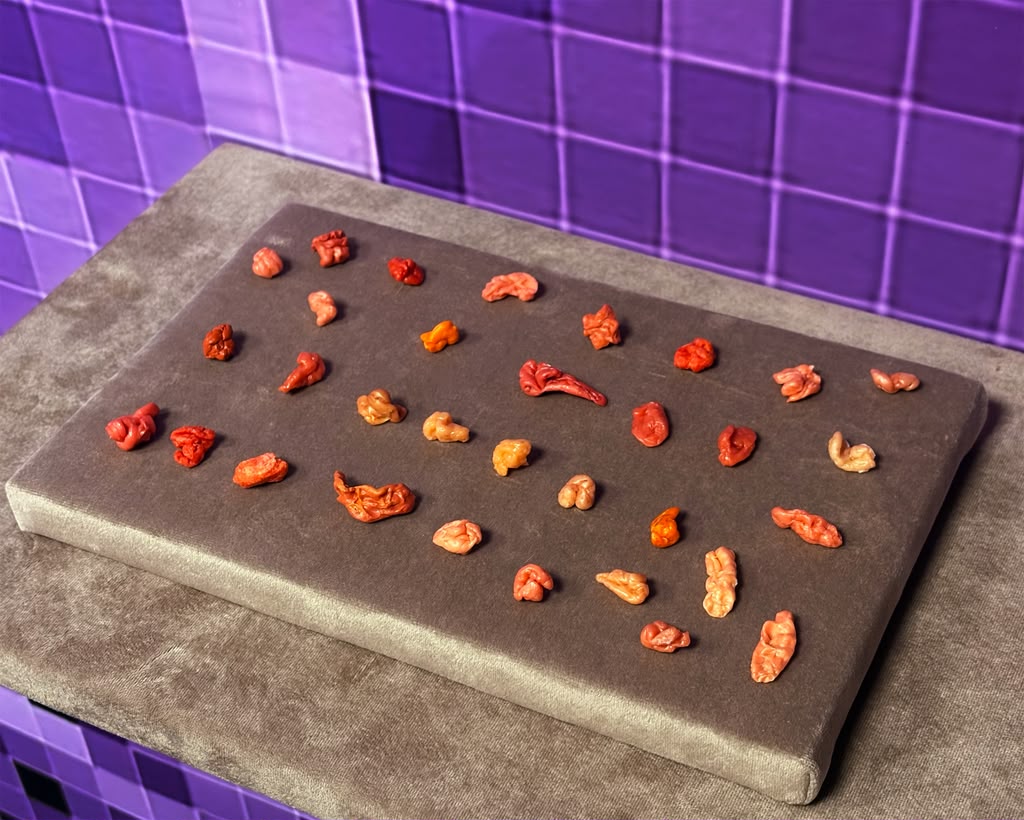
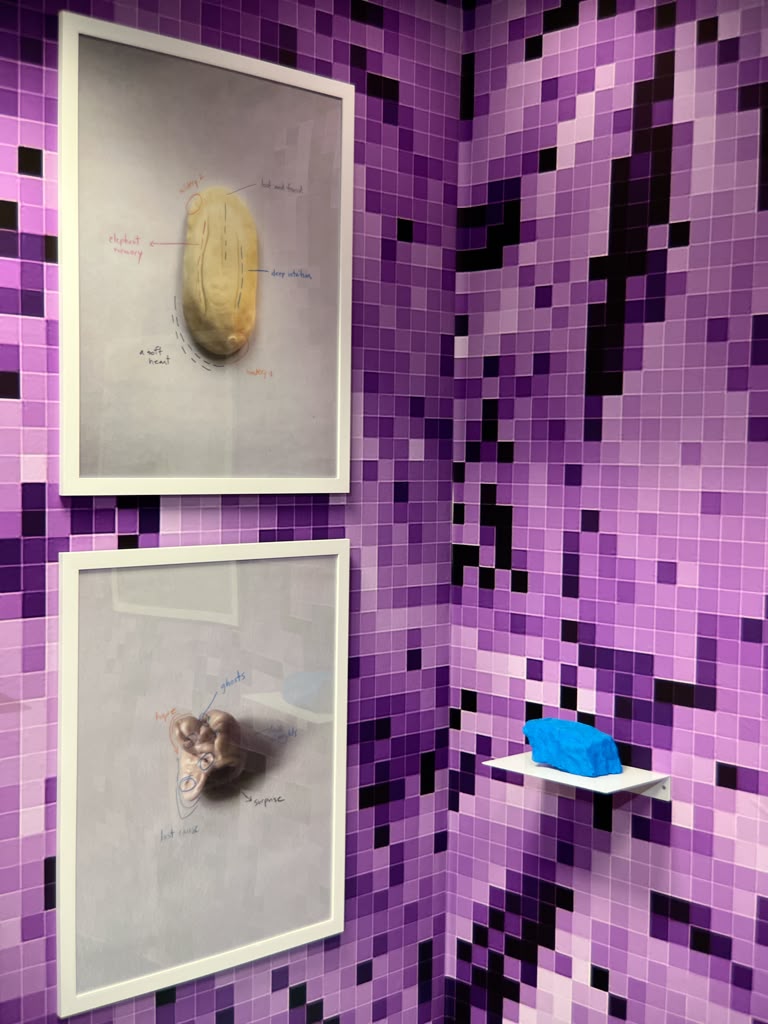
The artists in this exhibition approach these conditions by treating images, objects, and narratives as sites where interpretation emerges from traces that remain beyond the moment of production. In his photographic series /ˈärdə,fak(t),/, Matthew Cronin examines intentional digital compression errors and image distortions, revealing how photographs carry the hidden operations of the systems that produce them by pseudo-reversing the process to reveal simplified abstractions. Catalina Tuca’s Body Omens constructs a speculative system of divination by cataloguing the bodily traces left on everyday objects such as chewed gum or used soap, transforming ephemeral imprints into tools for interpretation. Joseph Wilcox’s Nobody Wants to Fix Things Anymore combines AI-generated imagery, surveillance photographs, and constructed installations to create narratives in which algorithmic interpretation and human longing become difficult to disentangle.
Presented together, they suggest that contemporary culture increasingly resembles a landscape of technological divination. Afterimage invites audiences to navigate these fragments and residues, and find meaning where it is partially concealed: in the glitches, the imprints, and the artifacts through which images, gestures, and data quietly persist, silently encoding the ongoing rhythms and routines.
Matthew Cronin lives and works between New York City and Boston. He holds an MFA in Studio Art from University of Texas at Austin as well as a BFA in Photography from Massachusetts College of Art and Design. Cronin’s process makes use of preexisting photographs which he reimagines through montage, multiple exposure, and alternate methods of capture. His work has been exhibited internationally at galleries and museums including The Visual Arts Center, Austin; Institute of Contemporary Art, Boston; Back Gallery Project, Vancouver, Lydian Stater, New York; and at the Singapore International Photography Festival. His work has been featured in numerous publications such as Der Greif; A New Nothing Vol. 1; Fotomen China; and Humble Arts Foundation. He has participated in residency programs at the NARS Foundation and Wassaic Project. Cronin’s work can be found in the Ogden Museum of Southern Art’s permanent collection and in the archives at the Center for Creative Photography. In 2024 Cronin was named a Fresh Finalist by Brooklyn’s Klompching Gallery.
Catalina Tuca is a Chilean multidisciplinary Visual Artist and educator, working in the intersections of geographic identities, collective memories, and hybrid systems of collaboration and participation. After earning a BFA and a degree in Visual Arts Education, she developed her career in Santiago, exhibiting her work in solo and group exhibitions, teaching Visual Arts and Film, and creating and directing art spaces, including Oficina Barroca Gallery and CANCHA Santiago Residency Program. She participated in art residencies at Youkobo Art Space, Japan; Taller 7, Colombia; and Skowhegan School of Painting and Sculpture, USA. In 2016 she moved to the US to pursue an MFA at Rutgers University, from where she graduated in 2018. After that, she was a member of NEW INC (The New Museum Incubator Program), NY; a resident at NARS Foundation, NY; a fellow at The Interdisciplinary Art and Theory Program, NY; a resident at Collider Art Residency, Contemporary Calgary, CA; and a fellow at the Foundation for Contemporary Arts, NY. She participated in solo and group exhibitions in the USA and abroad, with the most recent “Luma” at Cue Art Foundation, NY, USA. She is currently an Adjunct Assistant Professor at Pratt Institute, NY, and lives and works in Brooklyn, NY.
By adopting the roles of image gatherer, documentarian, object-maker, and organizer, Joseph Wilcox explores how institutional control, political systems, and social power structures undermine individual and collective autonomy. His films have screened at Slamdance (Park City, UT), London Short Film Festival (London), Onion City Experimental Film Festival (Chicago), Festival des Cinémas Différents et Expérimentaux (Paris), Festival Ecrã at Cinemateca do MAM (Rio de Janeiro), VIVO Media Arts Centre (Vancouver), and Hong-Gah Museum (Taipei). Solo and two-person exhibitions include Lydian Stater (Queens, NY), Good Children Gallery (New Orleans, LA), and Chicago Artists Coalition (Chicago, IL), with work also presented at Art Düsseldorf (Germany). He has been an artist-in-residence at Bemis Center for Contemporary Arts, NARS Foundation, HATCH Projects at the Chicago Artists Coalition, and LATITUDE Chicago. He lives and works in Brooklyn.
Elisa Gutiérrez Eriksen is a New York–based Mexican curator and arts producer specializing in contemporary art. Her work centers interdisciplinary approaches that interweave memory, ecology, territory, and identity through collaborative, site-responsive, and research-driven curatorial practice across exhibition-making, research, and public programming. She is Exhibition Project Manager for Historias at The Clemente Soto Velez Cultural Center. She is also Network Co-Director of Tiger Strikes Asteroid, a nonprofit network of independently programmed, artist-run exhibition spaces with locations in Philadelphia, New York, Los Angeles, Chicago, and Greenville, SC, and has been a member of the New York site since 2025. She is also the founder of Common Frequencies, a multidisciplinary platform that brings together artistic practices engaging sonic, environmental, and interspecies relations. Elisa previously served as Programs Manager and Curator at the New York Art Residency and Studios (NARS) Foundation, Cultural Specialist for the UNESCO Field Office in Mexico, and Head of Exhibitions for the nationwide Alas y Raíces program at the Mexican Ministry of Culture. As an independent curator, she has organized exhibitions and public programming at institutions and artist-run spaces, including Museo Universitario de Ciencias y Arte (MUCA), BioBAT Art Space, Lydian Stater, Home Gallery, op.cit., Salón Silicón, and 601 Artspace. She holds an MA in Art History and an Advanced Certificate in Curatorial Studies from Hunter College.